
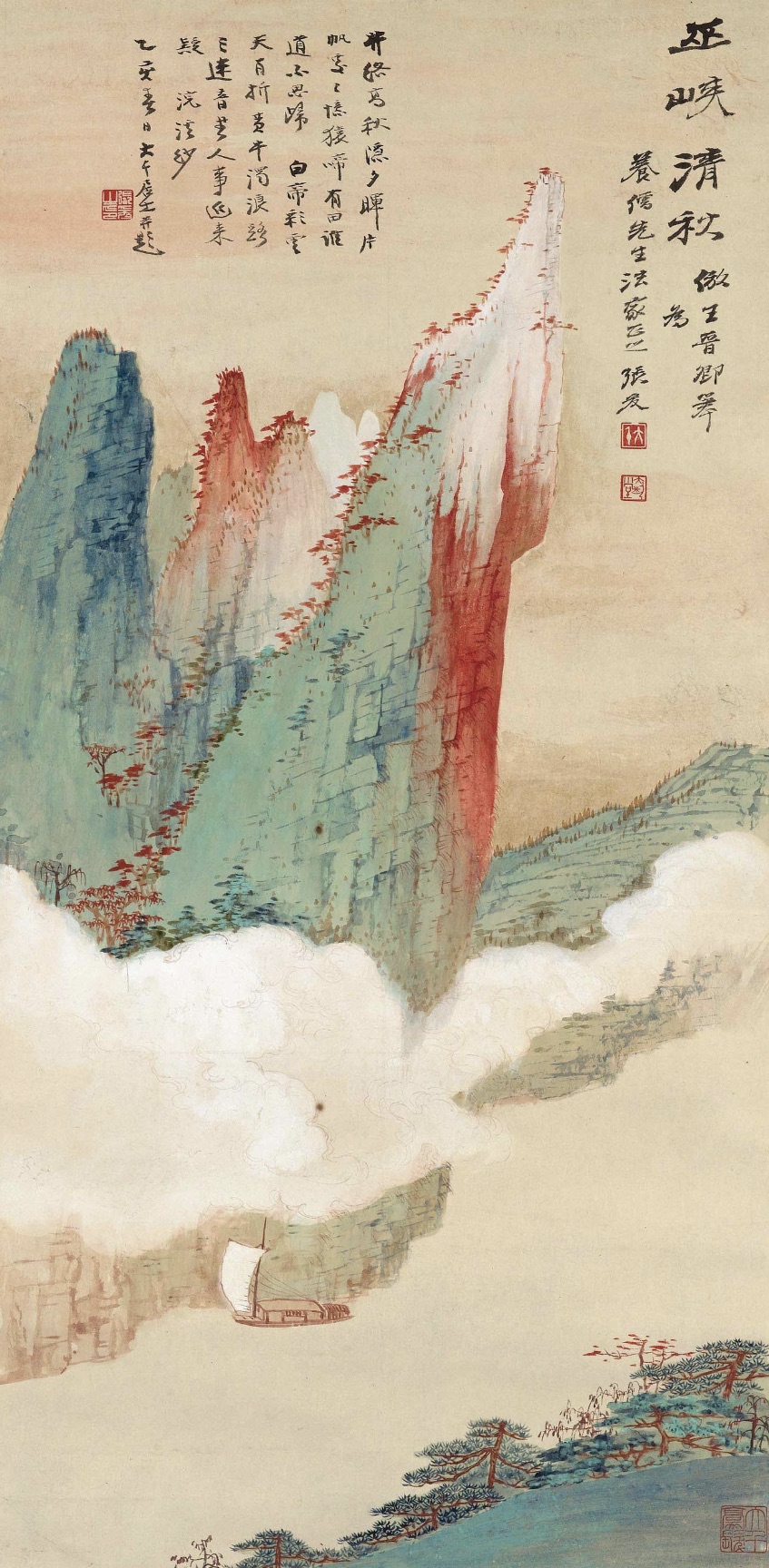
For Zhang Daqian, the 1930s was a period of rigorous learning from the styles of classical masters, initiating his creative “revival” of ancient art. Clear Autumn in Wu Gorge is representative of Zhang’s early landscape paintings and belongs to a series of works he painted in the same theme and period. Wu Gorge is one of the three gorges on the Yangtze River, through which Zhang frequently journeyed, traversing between Shanghai, where he learned to paint, and his hometown in Sichuan… It is also of no surprise that Wu was most noted in his artistic career for his portrayal of Wu Gorge in autumn. Zhang gave forms to his mountains by building tinted washes and applying opaque colours. The lack of rigid outlines diffuses the autumn lights through the red cliffs and the foliage and blends the mists and clouds seamlessly. Zhang also deliberately left much of the painting uncoloured, using liu bai to portray a clear and crisp sky and water to highlight the autumn mountains, especially the highest and most notable Goddess Peak, which stood majestically above the clouds.
READ FULL ESSAY: Christie’s
See More
Read More
Zhang Daqian: A guide to China’s most popular artist
Thanks for Visiting 🌻
~Sunnyside
 At Sunnyside - Where Truth and Beauty Meet