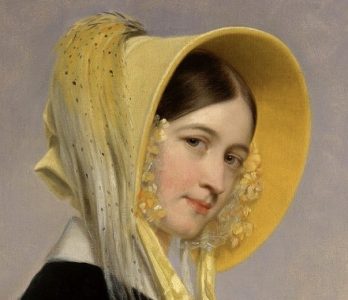
Although you are missed today as every other day, you will always be a part of every lovely landscape. ❤️❤️❤️
Tag: Painting
Odilon Redon: Etruscan Vase With Flowers
Odilon Redon’s Originality “Etruscan Vase With Flowers”, like so many of Redon’s other works, feels and looks like another world. Though there is nothing unconventional about the subject matter itself, he paints flowers that do not exist in nature with colors that are unexpected. The result is an extraordinary and original artwork. The Metropolitan Museum…
James Tissot: Waiting (In the Shallows)
Tissot: Master of Technique “‘Waiting’…demonstrates Tissot’s supreme skill as a painter in oils. The deft strokes and subtle colours of autumn leaves against shimmering water and filtered sunlight vie with Impressionist paintings, and the patch of water on the right, with reflected trees and floating leaves, is a painterly tour-de-force…Tissot is thought of principally as…
Jan van Kessel: Butterflies, Moths and More… (1654)
Cabinet of Curiosities in Paint Often produced as pendants, Jan van Kessel’s detailed depictions of insects, flowers and plants were sought after by collectors. They should be seen in the context of cabinets of curiosities. Van Kessel belonged to a famous dynasty of painters and is indebted in style and technique to his grandfather, Jan Brueghel…
Ivan Aivazovsky: Evening in Crimea
Who Is Ivan Aivazovsky? Born into an Armenian family in the Black Sea port of Feodosia in Crimea, Ivan Konstantinovich Aivazovsky (1817 – 1900) was an Armenian-Russian Romantic painter who is considered one of the greatest masters of marine art. The vast majority of his works are seascapes, but he often depicted battle scenes, Armenian themes,…
Sigmund Walter Hampel: Portrait of the Artist’s Daughter, Ulrike Hampel (1908)
Who Is Sigmund Walter Hampel? Sigmund Walter Hampel was born in Vienna on July 17, 1867. Son of a glass painter, in his father’s workshop Hampel learned about design, material and technique. Studying the old masters at the Vienna Academy of Art, the artist quickly acquired a delicate colouring and improved his technical skills. From…
Vincent van Gogh: The Olive Trees (1889)
Finding Beauty in Hard Places In the aftermath of the 23 December 1888 breakdown that resulted in the self-mutilation of his left ear, Vincent voluntarily admitted himself to an asylum in Saint-Remy, France. Because he occupied two cells with barred windows, the clinic and its garden became the main subjects of his paintings. He was…
Charles Leroy Saint Aubert: Au Dessus Du Boulevard De Sebastopol, Paris
Click For Enlarged Detail: Best viewed At Sunnyside Details Charles Leroy Saint Aubert 1852-1907 FRENCH AU DESSUS DU BOULEVARD DE SEBASTOPOL, PARIS signed Leroy. Saint. Aubert. lower right oil on canvas 73 by 88.5cm., 28¾ by 34¾in. Source: Sotheby’s Link: https://www.sothebys.com/en/auctions/ecatalogue/2009/19th-century-european-paintings-including-german-austrian-central-european-paintings-the-orientalist-sale-spanish-painting-and-the-scandinavian-sale-l09661/lot.143.html Thanks for Visiting! 🙂 The End
Leon Kroll: Appletrees, Woodstock (1922)
Leon Kroll first visited Woodstock in the summer of 1906 to study at the Byrdcliffe art colony. In 1920, Kroll returned to Woodstock, as it was a popular destination for artist’s to spend the summer. In Kroll’s autobiography, A Spoken Memoir, he describes hosting dinners for fellow artists who would summer in Woodstock, including the…
Maurice Utrillo: La rue du Mont-Cenis sous la neige (1935)
La rue du Mont-Cenis sous la neige As World War 1 began, Maurice Utrillo moved into a small studio overlooking the rue du Mont-Cenis in Montmartre – the street which became one his favorite subjects. “He would depict it in countless variations over the course of his career, under different weather conditions and lighting. With…
Federico Andreotti: Gypsy Beauty
This One, I Like! Florentine artist Federico Andreotti’s usual painting style of “elaborate period dress and affected airs… sometimes described as Rococo Revival” [1] does NOT appeal to me in general. However, Gypsy Beauty, is undeniably captivating and is the creation of a talented artist. Andreotti successfully captures the quiet joy of this dark haired…
Gyula Benczúr: Reading Woman in the Forest (1875)
A Popular Motif Gyula Benczúr (1844 – 1920) was a Hungarian painter and art teacher who specialized in portraits and historical scenes. Around 1874-1875, Benczúr tried to capture the form-dissolving effect of light in several compositions, but he resumed his course by wholly discarding plein air painting. As his letter reveals, he exhibited the…
Wilhelm Wachtel: The King of Israel Viewing Jerusalem…
Who Is Wilhelm Wachtel? According to Leo Baeck Institute Art and Objects: Wilhelm Wachtel was a Jewish-Polish realist painter and illustrator. Born in Lviv,[Ukraine], he studied at the Krakow Academy of Fine Arts under Leon Wyczółkowski and Leopold Löffler, and then the Academy of Fine Arts in Munich under Nikolaus Gysisa. He traveled to Vienna,…
Emily Carr: War Canoes, Alert Bay (1912)
The Audain Art Museum’s Permanent Collection of nearly 200 works of art is a visual journey through the history of art from coastal British Columbia. Spanning from the 18th century to present day, the Collection contains one of the world’s finest collections of Northwest Coast First Nations masks; a large collection of works by…
Emily Carr: Forest Glade
“I sat staring, staring, staring – half lost, learning a new language, or rather the same language in a different dialect. So still were the big woods where I sat, sound might not yet have been born.” -Emily Carr See Full Biography: Emily Carr: Who Is She?
Raimundo de Madrazo y Garreta: Girls at a Window (c.1875)
Click for enlarged detail: Did you spot the binoculars? 😎 Details Girls at a Window ca. 1875 Raimundo de Madrazo y Garreta (Spanish, Rome 1841–1920 Versailles) European Paintings Medium: Oil on canvas Catharine Lorillard Wolfe Collection, Bequest of Catharine Lorillard Wolfe, 1887 Metropolitan Museum of Art, New York, NY http://www.metmuseum.org/art/collection/search/436928 Thanks for Reading! 🙂 The…
Jean Brusselmans: Seringen [Lilacs], 1934
Via: Les Illusions perdues #Jean Brusselmans #Flemish expressionism #flower painting #lilacs #lilas #modern art #20th century Belgian art Click For Enlarged Image Jean Brusselmans (Belgian, 1884-1953), Seringen [Lilacs], 1934. Oil on canvas, 85 x 60 cm., Source: https://herzogtum-sachsen-weissenfels.tumblr.com/image/179720043974 Thanks for Visiting! 🙂 The End
Johann Heinrich Vogeler: Reverie
“People who believe they are ignorant of nothing have neither looked for, nor stumbled upon, the boundary between what is known and unknown in the universe.” – Neil deGrasse Tyson, Astrophysics for People in a Hurry
Chaim Soutine: View of Cagnes (c.1925)
“Someone Has Killed Soutine!” Chaim Soutine once horrified his neighbours in Paris by keeping an animal carcass in his studio to model for his painting called, not surprisingly, Carcass of Beef. The stench drove them to send for the police, whom Soutine promptly lectured on the relative importance of art over hygiene. There’s a story…
Chinese Qing Dynasty: Guanyin Bodhisattva
Click for Enlarged Image: Guanyin Bodhisattva, undated, Anonymous, Chinese, Hanging scroll; ink and color on silk, Qing dynasty, 1644–1912, 189 x 88 cm. (74 7/16 x 34 5/8 in.), Gift of DuBois Schanck Morris, Class of 1893, Source: Princeton University Art Museum, Link: http://artmuseum.princeton.edu/collections/objects/22771 Details: Guanyin Bodhisattva, undated Anonymous Qing dynasty, 1644–1912 Chinese Buddhism…
Kyoto Botanical Garden — rlmcdermott
What kind of trees were they that broke the color– all tall and green and dancing in the slow sunlight of an April afternoon? Women in blue kimonos stood beneath the delicate branches snapping pictures digital and bright. Children played, young mother’s strolled, stooped old men finished with their lives sat on stone benches. An…
Caspar David Friedrich: Sunburst in the Riesengebirge
‘…thus it is a great merit, maybe the greatest thing the artist is capable of, when he touches the spirit and arouses thoughts, feelings and emotions in the beholder, even if these are not his own.’Caspar David Friedrich “The rocky tumbling foreground symbolises the transience of earthly life (the solitary hut a reminder of the smallness of…
Maurice Denis: September Evening (1891)
Who Is Maurice Denis? Maurice Denis (November 1870 – 1943) was a French painter, decorative artist and writer who was an important figure in the transitional period between impressionism and modern art. He was associated with Les Nabis then the Symbolist movement, and then with a return to neo-classicism. His theories contributed to the…
Ernst Ludwig Kirchner: Mountain Landscape from Clavadel (1925–26)
Switzerland: Kirchner’s Later Years William Cook in The Spectator comments, “Here in rural Graubünden, he couldn’t help but lead a healthier life. This dramatic change of scene was reflected in his art. His emotive use of colour was as revolutionary as ever, but painting landscapes instead of cityscapes meant that the effect was entirely different….
Ernst Ludwig Kirchner: Gut Staberhof III (1913)
The Truth, … and Nothing But the Truth I’ll be honest. Many of Ernst Kirchner’s works are….. not my favorites. (There. I said it.) This painting, however, caught my eye immediately because of the colors. A pink street? What is that all about? I looked more closely. The trees are full of texture and movement,…
Nikolai Bogdanov-Belsky: Boys in a Birch Forest
Click for Enlarged Detail: Details Nikolai Petrovich Bogdanov-Belsky 1868-1945 BOYS IN A BIRCH FOREST signed in Cyrillic l.l. oil on canvas 81.5 by 104.5cm, 32 by 41in. Source: Sotheby’s Thanks for Visiting! 🙂 The End
Jenny Montigny: “The Gardener”
Google Said ‘oeuvre’, not I 😉 Jenny Montigny preferred to paint everyday scenes from the countryside and village life in Sint-Martens-Latem. As here in “The Gardener”, these snapshots are not a reason to visualize social abuses or emphasize the weight of labor. On the contrary, Montigny always painted a harmonious society. The subject itself seems…
Eric Sloane: Barn in the Valley
Click for Enlarged Image: Best viewed At Sunnyside To be auctioned November 8: Eric Sloane, Barn in the Valley.Oil on Masonite, 17-1/2 x 22-3/4 inches (44.5 x 57.8 cm), Signed, image source: MutualArt: https://www.mutualart.com/Artwork/Barn-in-the-Valley/9B9F8C2531AAE839 Thanks for visiting! 🙂 The End
Henri de Toulouse-Lautrec: At the Moulin Rouge -The Dance (1890)
On a Crowded Dance Hall, Paris, 1890 At the Moulin Rouge, the Dance is an oil-on-canvas painted by French artist Henri de Toulouse-Lautrec in 1890, the second of a number of graphic paintings by Toulouse-Lautrec depicting the Moulin Rouge cabaret. Built in Paris in 1889, the cabaret portrays two dancers dancing the can-can in the middle…
Edward Bannister: Boston Street Scene (1898-99)
Who Is Edward Mitchell Bannister? Edward Mitchell Bannister (1828 –1901) was a Black Canadian–American Tonalist painter. Like other Tonalists, his style and predominantly pastoral subject matter were drawn from his admiration for Millet and the French Barbizon School. In fact, Bannister’s work often reflects the composition, mood, and influences of French Barbizon painters including Jean-Baptiste-Camille…
 At Sunnyside - Where Truth and Beauty Meet