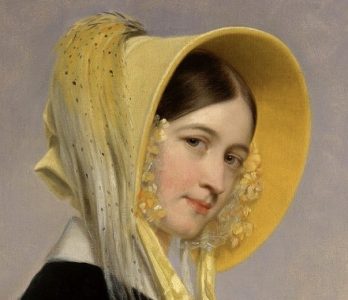
by jonathan5485 at my daily art display “One of my favourite paintings by Eva Gonzalès was her early work entitled Le Moineau (The Sparrow). The teenage model for this painting was the artist’s sister Jeanne. Jeanne Gonzalès appeared in over twenty of Eva’s works. It is a portrait of great elegance. It is a depiction…
Tag: art
Habiballah of Sava: Language of the Birds
“Language of the Birds” – 12th Century Language of the Birds (Persian: منطق الطیر, Manṭiq-uṭ-Ṭayr, also known as مقامات الطیور Maqāmāt-uṭ-Ṭuyūr; 1177), is a mystical twelfth century Persian literary masterpiece by poet Farid ud-Din Attarin, commonly known as Attar of Nishapur. The poem title, which is in Arabic, is taken directly from the Qur’an, 27:16,…
Vincent van Gogh Meets Dr. Who
This is a perfectly imagined and executed scene. Post best viewed At Sunnyside. Image Credit: Vincent Van Gogh, 1853-1890, Self-portrait, (1889). Paris, Orsay. by jean louis mazieres, Via Flickr: (Source: https://www.flickr.com/). Thanks for Visiting 🙂 ~Sunnyside
Vivaldi: Violin Concerto in A Minor RV 356
Thanks for Visiting 🙂 ~Sunnyside
John Singer Sargent: Carnation, Lily, Lily, Rose
The title comes from the song ‘The Wreath’, by the eighteenth-century composer of operas Joseph Mazzinghi, which was popular in the 1880s. Sargent and his circle frequently sang around the piano at Broadway. The refrain of the song asks the question ‘Have you seen my Flora pass this way?’ to which the answer is ‘Carnation,…
Mariam Batsashvili: Concerto in D minor 974
Thanks for Visiting 🌻 ~Sunnyside
Hauser & Trotovsek: Erbarme Dich, Mein Gott (Bach)
Read More Ilya Repin at wikiwand Hear More Tag: Hauser At Sunnyside Thanks for Visiting 🙂 ~Sunnyside
John Duncan Fergusson: On the Road to the Isles (1928)
Click For Enlarged Detail Slideshow best viewed At Sunnyside Details John Duncan Fergusson (1874-1961) On the Road to the Isles signed and dated ‘J.D. FERGUSSON./1928’ (on the reverse), signed again and inscribed ‘THE ROAD TO THE ISLES,/J.D. FERGUSSON’ (on the artist’s label attached to the stretcher) oil on canvas 22 x 24 in. (55.9 x…
Pierre Bonnard: The Croquet Game (1892)
The Game of Croquet is one of the first works by Pierre Bonnard, one of the founders of the Nabi group in 1888. It was exhibited in 1892 at the Salon des Indépendants under the title Twilight. The painting shows the garden of the family home, at Le Grand-Lemps, in Isère…The subject of the painting…
Edgar Degas: The Four Ballerinas in Blue (c1897)
Click for Enlarged Detail Slideshow best viewed At Sunnyside Read More Italian wikiwand “Ballerine dietro le quinte“ Google English translation of the Italian wikipedia page Note I found several different names for this painting on various websites. Thanks for Visiting 🙂 ~Sunnyside
Batsashvili and O’Keeffe: Serenade and Reflection
“Painted circa 1921-22, Georgia O’Keeffe’s Lake George Reflection embodies the contradictions inherent in the artist’s best work which came to define her career and cement her legacy as one of the most enduring and intriguing figures in 20th-century American Art. Lake George Reflection, the most ambitious in scale of her works from the 1920s,is a…
Georg Friedrich Händel: Concerto Grosso Op. 3, no. 2
Georg Friedrich Händel, Concerto Grosso Op. 3, no. 2
with Video of Maria Sibylla Merian artwork
Tamara Natalie Madden: “Out of Many, One People”
Though Tamara Natalie Madden was born in Kingston, Jamaica, she spent her teenage years in Madison, Wisconsin. Born with dark skin to a mother with light skin, Ms. Madden observed endemic racist behavior from people of color, both in Jamaica and in the United States – based solely on the degree of darkness of skin;…
Edgar Degas: Danseuse au tutu vert (c1887)
See More Edgar Degas At Sunnyside Thanks for Visiting 🙂 ~Sunnyside
Isobel Lilian Gloag: Four Corners to my Bed
‘Four corners to my bed Four angels round my head Matthew, Mark, Luke & John Bless the bed that I lie on’ What Does This Mean? James Greig explains this rhyme in his essay “Isobel Lilian Gloag and Her Work“, published in The Magazine of Art, Volume 26 in 1902: ” [This] is a…
Hauser: Benedictus
“What a task this cathedral is!” wrote Monet from Rouen, in a letter to his wife in Giverny. He painted nearly thirty views of the cathedral’s façade, moving from one canvas to the next to capture different moments throughout the day. After returning home, he continued to work on this series for two more years….
Bierstadt’s Butterflies
“Bierstadt’s guests were often favored with delightful souvenirs from his hand. In Nassau these were little seashells with a few strokes of paint inside; in New York they were the famous ‘Bierstadt butterflies.’ His technique in charming the ladies with little Bierstadts of their own was described in 1892 by the lady reporter who had…
Debussy: La Fille aux Cheveux de Lin
Hear More Debussy At Sunnyside See More Gustav Klimt At Sunnyside Gustave Klimt at Belvedere Read More Gustav Klimt at wikiwand Thanks for Visiting 🌻 ~Sunnyside
Edgar Degas: The Singer in Green (c.1884)
A sale catalogue in 1898 described the dancer pictured in Edgar Degas’ pastel, The Singer in Green: “Skinny and with the graceful moves of a little monkey, she has just sung her ribald verses and, with a gesture that conceals an entreaty behind her smile, is inviting applause.” With her small eyes, high cheeks, and…
Hauser & Trotovsek: Passacaglia (Handel-Halvorsen)
“In many of his late paintings, Turner used vigorous brushstrokes and loosely defined forms to explore dramatic struggles between human beings and the elements. This work shows a storm raging in an English harbor town. Flares explode in the sky to alert ships to the location of shallow (shoal) water. On the shore huddled spectators…
Week 27: Joy, by Sunnyside
Hat Tip Inspired by Mieczysław Rakowski. Mère à l’enfant, 1942, found at Polish Art Corner. Happy Sunday! 🙂 ~Sunnyside
Ivo Pogorelich: Für Elise
“Renoir made several paintings of spectators at theaters or concerts—a subject that explores the theme of seeing and being seen. Although the artist may have begun the painting as a portrait of specific individuals, he later reworked it to present two women whose identities and relationship are unknown. The subdued lighting and clearly defined forms…
Georgia O’Keeffe: Blue Flower (1918)
“One of the pioneers of American modernism, Georgia O’Keeffe (1887-1986) was a member of Alfred Stieglitz’s circle of progressive artists who made it their mission to create a new and distinctly American art. She was one of the few women in the group and, to her frustration, contemporary critics often highlighted the ability of her work to express “femaleness.” In 1922 she…
Week 26: Undaunted by Sunnyside
Undaunted I like his attitude…😎 Thanks for Visiting 🙂 ~Sunnyside
Mozart: Oboenkonzert C-Dur KV 314
A performance by François Leleux that is guaranteed to improve your day. 😎 Hear More Mozart At Sunnyside Frankfurt Radio Symphony Read More František Kupka at Art Story Frantisek Kupka, 1871-1957 – Internet Archive See More František Kupka At Sunnyside Hat Tip Thanks to Claudio Capriolo for introducing me to this performance in his post…
Edmond Aman-Jean: Femme à la fleur
Read More Edmond Aman-Jean at wikiwand See More Edmond Aman-Jean at Art Renewal Center Edmond Aman-Jean at wikimedia commons Thanks for Visiting 🙂 ~Sunnyside
Brummett Echohawk: An Island of Redbuds on the Cimarron
Read More Gilcrease Museum Thanks for Visiting 🌻 ~Sunnyside
Catchlight:Leonardo…a fun guy
A little history, a little art, and a controversy! Reblogged from Catchlight. This portrait is generally referred to as La Bella Principessa. The appellation was given by art historian Martin Kemp, a leading authority on the life and works of Leonardo da Vinci. The sitter is thought to be Bianca Giovanna Sforza, an illegitimate daughter…
Telemann: Fliehet hin, ihr bösen Tage
TRANSLATION: Fly away, evil days of my life, fly away! Constant suffering has left me less than half alive. Bitters and affliction have been my drink and daily bread. My time has been spent in groans, signs and wringing my hands. Jeffrey Stivers Thanks for Visiting 🙂 ~Sunnyside
Odilon Redon: Ophelia Among the Flowers
“The painting illustrates a particular moment in the play, in which Ophelia finds her way to the brook, where she meets her end amongst the flowers that she has gathered. This moment, though frequently figured as a descent into madness, can also be interpreted as an escape from the patriarchal dominance that has moulded her…
 At Sunnyside - Where Truth and Beauty Meet